
Discover how DHA and folate work together to support your baby's development and your health during pregnancy, ensuring a strong foundation for both of you.
Pregnancy comes with a long to-do list, and figuring out your nutrition is often at the top. It’s normal to feel a little overwhelmed by all the prenatal vitamins and minerals recommended. While a balanced diet is important, we are going to discuss two important nutrients in this article: DHA (docosahexaenoic acid) and folic acid (or folate). These nutrients help support the development of your baby’s brain and spinal cord, the very foundation of your child’s growth.
Understanding how these two work together can give you peace of mind that you’re providing the best possible start for your baby. Let’s explore why they’re so important and how you can make sure you’re getting enough of both.
Think of DHA and folic acid as the building blocks for your baby’s central nervous system. While they have different jobs, they’re both important in supporting a healthy pregnancy:
DHA is an omega-3 fatty acid that’s a major structural component of the human brain and retina.1 During pregnancy, it helps support the development of your baby’s brain and eyes.
This B vitamin (vitamin B9) plays a significant role in the early development of your baby’s neural tube, which eventually becomes their brain and spinal cord. Getting enough folate helps reduce the risk of major birth defects of the baby’s brain and spine,2 so it’s important to ensure you’re getting enough folic acid during your pregnancy.
What’s the difference between folate and folic acid? Folate is the natural form found in foods, whereas folic acid is the form found in supplements. Some people have something called the MTHFR gene mutation, a variant that makes it difficult to break down folic acid.3 That’s why some prenatal vitamins contain methylfolate, a form of folate that is easy for women to absorb. If you’re concerned about your folate levels, talk to your doctor; they may recommend a blood test or simply ensure you’re taking a prenatal vitamin as recommended.4
Your baby’s central nervous system is a complex network that is supported by both DHA and folate to form. While folate is busy helping close the neural tube in the earliest weeks of pregnancy to support spinal health, DHA is accumulating in the brain to support cognitive and visual development.
Together, they provide comprehensive support for your baby’s nervous system from the very beginning. By consuming both, you’re supporting the entire command center of their growing body.
The ideal time to start focusing on these nutrients is before you even see a positive pregnancy test. A good rule of thumb is to start prenatal vitamins about three months before conception.
However, if you’re already pregnant and haven't started yet, don't worry. It’s never too late to start supporting your baby's nutrition. Start incorporating these nutrients now to support your baby’s growth.
To meet your nutritional needs during pregnancy, combine a healthy diet with smart supplementation.
You can find DHA and folic acid in a variety of foods.
Foods with DHA:
Foods with Folate:7
Even with a perfect diet, it can be hard to reach the recommended daily amounts solely through food. This is where a high-quality prenatal vitamin comes in.
When looking for a supplement, check the label for:
Enfamil has a long history of supporting prenatal nutrition with strict safety protocols and high-quality ingredient sourcing. We understand that safety is your top priority, which is why we are committed to science-backed nutrition that parents trust. If you’re looking for guidance on choosing the right option, check in with one of our Enfamil Experts.
Pregnancy is a journey, and you don’t have to do it alone. Join Enfamil Family Beginnings® to get support tailored to your due date. You’ll receive expert tips on nutrition (including the importance of DHA and folic acid), updates on your baby’s development, and up to $400 in savings and exclusive rewards. Let us be a part of your support team as you get ready to welcome your little one.
References
1https://www.dhaomega3.org/overview/dha-for-optimal-brain-and-visual-functioning↗
2https://pubmed.ncbi.nlm.nih.gov/10429019/↗
3https://www.ynhhs.org/articles/difference-between-folate-and-folic-acid↗
4https://health.clevelandclinic.org/a-genetic-test-you-dont-need↗
5https://www.fda.gov/food/consumers/advice-about-eating-fish↗
6https://ods.od.nih.gov/factsheets/Omega3FattyAcids-Consumer/↗
7https://www.fda.gov/food/nutrition-facts-label/folate-and-folic-acid-nutrition-and-supplement-facts-labels↗
8https://americanpregnancy.org/healthy-pregnancy/pregnancy-health-wellness/pregnancy-vitamins-nutrients/↗
9https://my.clevelandclinic.org/health/drugs/9754-pregnancy-prenatal-vitamins↗
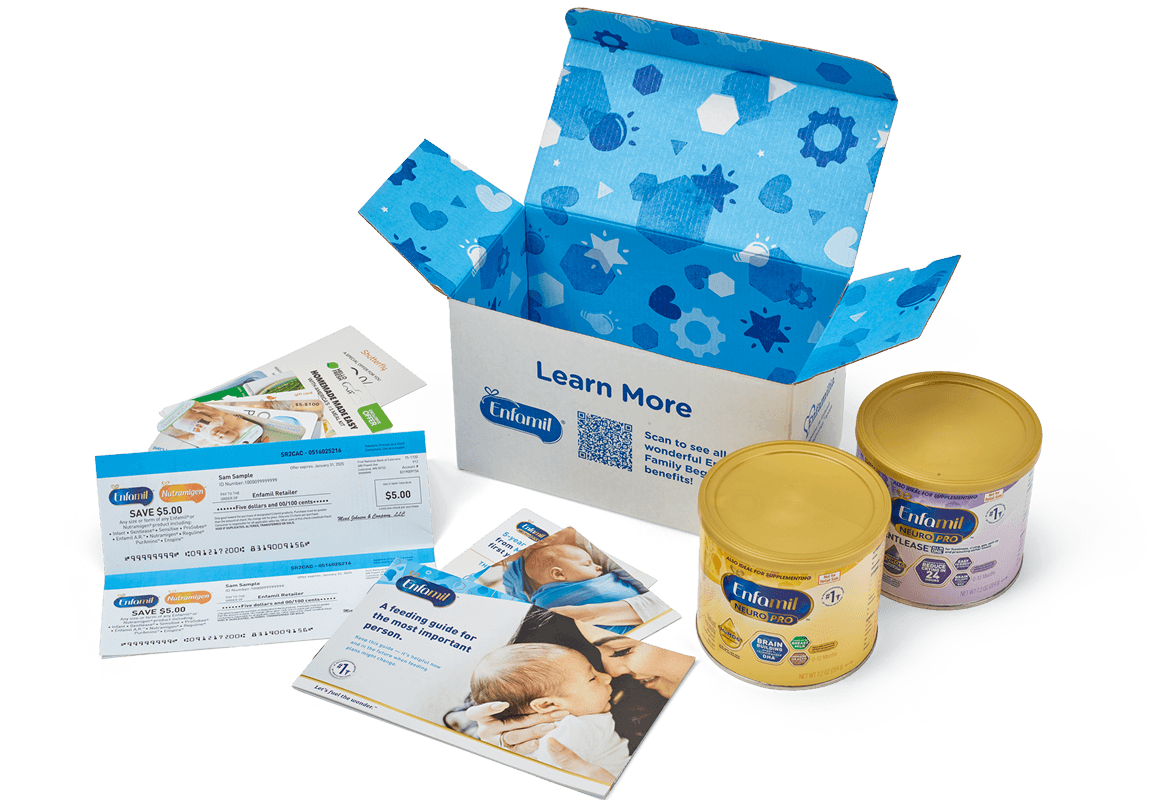
During your pregnancy, you and your baby experience exciting changes every day. Prepare for your new arrival with help from Enfamil Family Beginnings. It’s the perfect resource for new and expecting moms. Save on Enfamil products, track your pregnancy and baby’s growth, and get helpful articles relevant to your journey.
Join NowAll information on Enfamil, including but not limited to information about health, medical conditions, and nutrition, is intended for your general knowledge and is not a substitute for a healthcare professional's medical identification, advice, or management for specific medical conditions. You should seek medical care and consult your doctor or pediatrician for any specific health or nutrition issues. Never disregard professional medical advice or delay seeking medical treatment, care, or help because of information you have read on Enfamil.
.png&w=3840&q=75)